
Beach Rescue Tubes: Lifesaving Stations Along Our Shore
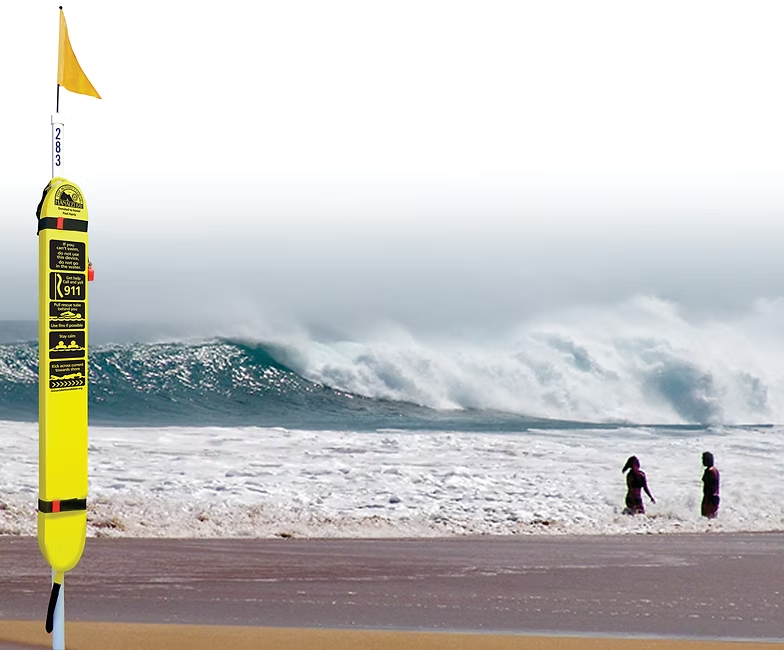
Look down the beach in Cocoa Beach and you’ll spot them: bright yellow tubes hanging from posts every block or so, ready to help in an emergency. These are Rescue Tubes, one of the simplest, most effective drowning-prevention tools ever put on a public beach.
The Rotary Club of Cocoa Beach, in partnership with the City of Cocoa Beach, has installed 56 Rescue Tube stations along our public beaches. Each one holds a lightweight, foam flotation device that a competent swimmer can grab and use to assist someone in distress.. The tubes stand ready 24 hours a day, 365 days a year, for use when a lifeguard is not on duty. Signs at each station include location information for the 911 call and instructions on attempting a rescue.
If you’re not a confident swimmer yourself, the most important thing you can do is call 911 and alert others nearby.
Where the idea came from
The program traces back to 2008 on the island of Kauai, Hawaii, where the numbers told a sobering story: more people were dying in the ocean there than on the highways. Two local Rotarians, Branch Lotspeich and John Gillen of the Rotary Club of Hanalei Bay, partnered with lifeguards and first responders to place simple foam rescue tubes at the island’s most dangerous, least-guarded beaches. The idea worked, and it spread. Today the Rescue Tube Foundation has helped install more than 800 stations across Hawaii, the U.S. mainland, and Canada, in every case powered by local partnerships between Rotary clubs, Lions clubs, city governments, and lifeguard agencies.
Cocoa Beach Rotary brought that same model home to Brevard County, working with the City of Cocoa Beach to place tubes at public beach accesses so that help is always within reach, no matter where you’re standing on the sand.
How it works
Each Rescue Tube is a 50 inch foam flotation device, tethered to a post so it’s always in the same spot and easy to find. It’s built to keep up to three people afloat at once. The tube is printed with simple picture instructions, so its purpose is easy to understand at a glance, regardless of age or the language you speak.
Calling 911 with the location is the first, most important action. Actually swimming it out to someone in trouble should still be left to a confident, competent swimmer. If you are not a strong swimmer, you still have an important job to keep watch on victims and rescuers and direct emergency responders upon arrival.
If you see someone struggling in the water: call 911 or ask someone nearby to do it, grab the tube if you are comfortable and swim it out to the person using the shoulder strap — without ever needing to touch or grab the swimmer directly. The tube keeps both of you afloat until professional help arrives. Full step-by-step instructions are in the FAQ below.
Why Rescue Tubes Matter
They protect the rescuer, not just the swimmer. Every year, well-meaning bystanders drown trying to save someone else, often because they go into the water with nothing to keep themselves afloat. A Rescue Tube gives a rescuer something to hold onto and something to hand off, dramatically lowering the risk to the person trying to help. A peer-reviewed study published in the journal Injury Prevention (2022) looked at 25 years of Hawaii drowning data and found that after Rescue Tubes were introduced on Kauai in 2008, the island’s share of statewide rescuer drownings dropped sharply, from 60% of all rescuer deaths in the years before Rescue Tubes to just 13% afterward. No other county in Hawaii saw that same drop.
They cover the gaps lifeguards can’t. Lifeguards are stationed at specific towers and specific hours, but our beaches are long and open around the clock. Rescue Tubes stand watch at the access points in between, and after lifeguards go off duty, so there’s always a lifesaving tool nearby for competent swimmer use.
Any competent swimmer can use one, immediately, for free. There’s no app, no key, no membership, and no certification required. The instructions are graphic-based and easy to follow under pressure, so even a tourist who’s never seen a Rescue Tube before can grab one and use it correctly on the first try — as long as they’re a capable swimmer themselves. Non-capable swimmers have an important role to keep watch on victims and rescuers in the surf and direct emergency responders upon arrival.
They have a genuine track record. Rescue Tubes have been used in over 200 documented rescues since the program began. Every known rescue using a Rescue Tube has been successful, and no rescuer has ever been reported injured while using one.
It’s a community effort, built to last. Cocoa Beach Rotary volunteers and the City of Cocoa Beach check and maintain every station, and the public can report a damaged or missing tube directly through our website so it gets fixed fast. It’s a simple, low-cost program with an outsized impact on beach safety, exactly the kind of hands-on community service Rotary is built for.